Taxi operators can manage bookings, dispatch, pricing, drivers, and fleet activity in several ways. Some businesses still depend heavily on phone bookings, dispatcher judgement, spreadsheets, and fixed operating rules. Others use digital platforms that automate repetitive tasks and provide real-time operational data.
However, not every automated feature is powered by artificial intelligence. Automated dispatching may follow predefined rules, while genuine AI capabilities use data to identify patterns, generate recommendations, or adapt decisions based on changing conditions.
The right approach depends on your fleet size, booking volume, operational complexity, budget, data availability, and need for human control.
This comparison explains how traditional, rule-based, and AI-supported taxi management differ across dispatching, pricing, routing, analytics, implementation, cost, and operational limitations.
What Is the Difference Between Traditional, Automated, and AI-Based Taxi Management?
Before comparing the two approaches, operators need to understand that taxi management technology generally falls into three categories.
Traditional Taxi Management
Traditional management depends heavily on people and fixed processes. Dispatchers receive bookings, select drivers, communicate trip details, update records, and resolve operational issues manually.
Some traditional businesses may use basic booking or tracking software, but decisions still depend mainly on staff.
Rule-Based Taxi Automation
Rule-based automation performs tasks according to predefined conditions. For example, a system may automatically assign a ride to the nearest available driver, apply a configured zone fare, or send a notification when a trip status changes.
This reduces manual work, but it does not necessarily mean the platform is using AI.
AI-Supported Taxi Management
AI-supported systems analyse operational data to identify patterns, generate predictions, or recommend decisions.
Depending on the actual capability, AI may support demand forecasting, booking data extraction, driver allocation recommendations, conversational booking, anomaly detection, or operational analysis.
In practice, many modern taxi platforms combine manual controls, rule-based automation, and selected AI capabilities rather than operating entirely through AI.
Where Traditional Taxi Management Works and Where It Becomes Limited
Traditional management can work for small fleets with predictable booking volumes, experienced dispatchers, simple pricing, and limited service areas. It gives operators direct control and may require less initial process change.
However, limitations become more visible as booking volume, fleet size, service areas, pricing rules, and customer expectations increase.
The following challenges usually appear when manual decisions cannot keep pace with operational complexity.
Dispatch Takes Too Long
Manual dispatch slows operations. When customers call for a taxi, your dispatcher assigns a driver based on availability, but this method creates delays. Drivers end up waiting longer between rides, wasting fuel and time. Customers experience longer wait times, leading to frustration.
How Automation Can Help
Automated dispatching can assign or offer trips according to configured factors such as driver availability, vehicle type, service zone, proximity, queue position, or operator-defined priority. More advanced systems may also use historical or real-time data to support allocation decisions.
Poor Customer Experience Hurts Business
Customers expect fast service, accurate pricing, and reliable rides. Traditional taxi systems cannot meet these expectations. Passengers often experience unpredictable ETAs, inconsistent fares, and difficulty tracking their rides.
How Modern Platforms Can Help
Modern taxi platforms can provide estimated arrival times, digital fare estimates, booking confirmations, driver details, and live ride visibility. These capabilities improve passenger communication, although their accuracy still depends on map data, driver availability, traffic information, and correct system configuration.
High Operational Costs Cut Into Profits
Fuel wastage, inefficient dispatching, and unnecessary employee costs increase expenses. Traditional taxi businesses rely on manual intervention, leading to errors and inefficiencies.
How Automation Can Help
Automation can reduce repetitive dispatch work, improve ride allocation, and give operators better visibility into driver and vehicle activity. Route guidance and operational data may also help reduce avoidable idle time and empty mileage.
The actual savings depend on booking density, fleet behaviour, operating area, and adoption.
No Data-Driven Decision Making
Traditional taxi businesses lack real-time insights. Decisions rely on experience rather than accurate data. Without analytics, you cannot optimize driver performance, fleet usage, or customer preferences.
How Reporting and AI Can Help
Reporting tools can help operators monitor completed rides, cancellations, driver acceptance, response times, fleet utilisation, revenue, and booking sources.
AI-based analysis may go further by identifying patterns or forecasting demand, but only when enough reliable historical and real-time data is available.
Scalability is a Challenge
Expanding your business requires significant investments in infrastructure and workforce. Traditional taxi systems struggle to scale efficiently, limiting growth opportunities.
How a Modern Platform Can Help
A cloud-based taxi platform can make it easier to add drivers, vehicles, service areas, booking channels, and operational users without rebuilding the complete system. This scalability comes primarily from the platform’s architecture and configuration, not from AI alone.

AI-Based vs Traditional Taxi Management: Side-by-Side Comparison
Neither approach is automatically right for every taxi business. Traditional management may remain practical for a small and stable operation, while automation becomes more valuable as booking volume, service complexity, and fleet size grow.
The table below compares the approaches across the factors operators should evaluate before making a decision.
| Comparison area | Traditional taxi management | Automated or AI-supported management |
|---|---|---|
| Dispatch | Dispatchers manually select and contact drivers using availability and experience. | Configured rules can assign or broadcast trips automatically. AI may support allocation recommendations using operational data. |
| Pricing | Fares are usually fixed, manually calculated, or adjusted by staff. | Zone, time, vehicle, distance, and demand rules can calculate fares automatically. AI-based pricing requires verified demand modelling. |
| Routing | Drivers depend on local knowledge, radio instructions, or standard navigation. | Maps and live traffic data can recommend routes. AI may analyse broader patterns, but route guidance is not always AI-based. |
| Analytics | Reports may depend on spreadsheets, manual records, or basic software exports. | Dashboards can track operational KPIs. AI may identify patterns, anomalies, or likely demand changes. |
| Cost | Lower software investment may be possible, but more staff time may be required as volume grows. | Platform, implementation, integration, training, and subscription costs may be higher, but automation can reduce repetitive work. |
| Operational control | Dispatchers maintain direct control over most decisions. | Operators can configure rules and retain manual override, depending on the platform. |
| Implementation | Existing workflows may require little technical change. | Requires configuration, data preparation, integration, staff training, testing, and phased rollout. |
| Data requirements | Can operate with limited structured data. | AI performance depends on sufficient, accurate, and relevant data. |
| Scalability | Additional volume often requires more dispatch staff and manual coordination. | Centralised workflows can support more bookings, drivers, and service areas without proportional staffing growth. |
| Limitations | Slower response, inconsistent decisions, limited visibility, and reliance on individual staff knowledge. | Depends on system configuration, data quality, integration reliability, user adoption, and the accuracy of automated recommendations. |
| Best suited for | Small, predictable operations with low complexity and experienced dispatch teams. | Growing fleets, multichannel booking operations, multiple service areas, or businesses needing greater operational visibility. |
Where Automation and AI Can Improve Taxi Operations
Modern taxi platforms usually combine fixed rules, workflow automation, real-time data, and selected AI capabilities. Operators should therefore evaluate each feature individually rather than assuming that every automated function is powered by AI.
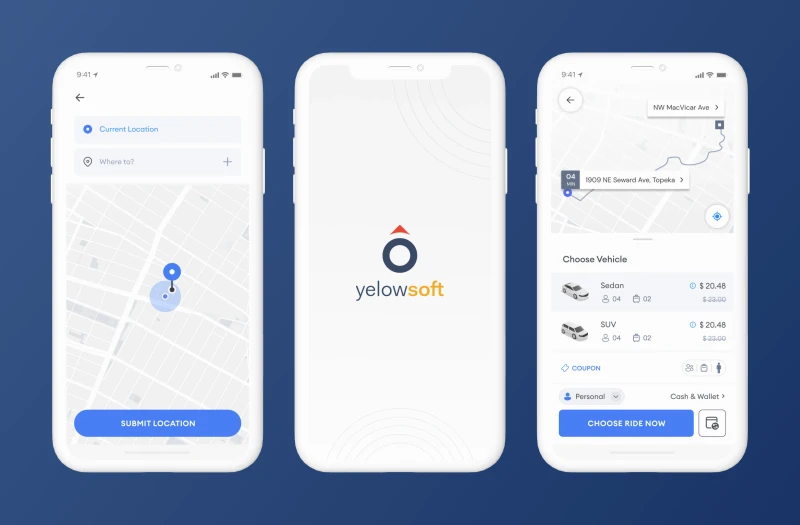
Automated Dispatching Reduces Manual Assignment Work
Automated dispatching can assign, queue, or broadcast trips using operator-defined criteria such as availability, proximity, service zone, vehicle type, and driver priority. AI may support more advanced recommendations, but the underlying dispatch logic must be clearly verified.
Live Data Supports Better Routing Decisions
Map and traffic integrations can help drivers identify efficient routes and respond to changing road conditions. More advanced optimisation may use historical trip data or multiple operational variables, but standard navigation should not automatically be described as AI.
Dynamic Pricing Helps Operators Respond to Changing Conditions
Dynamic pricing can adjust fares according to configured factors such as time, demand, service zone, booking type, vehicle category, or availability. Operators should maintain pricing controls, communicate fares clearly, and comply with applicable local regulations.
Analytics Improve Fleet Planning
Operational dashboards can reveal booking demand, cancellations, response times, driver activity, fleet utilisation, and revenue trends.
Predictive analysis may help forecast future demand, but its reliability depends on data volume, data quality, seasonality, and local market conditions.
Which Taxi Management Capabilities Should Operators Evaluate?
When evaluating a modern taxi management platform, operators should focus on verified capabilities rather than broad AI labels.
Booking and Dispatch Automation
Check whether the platform can centralise bookings, apply dispatch rules, assign or broadcast trips, and allow dispatchers to intervene when required.
Pricing and Fare Controls
Evaluate whether operators can configure fares by zone, distance, time, vehicle, booking type, and other business-specific conditions.
Live Operational Visibility
The platform should help dispatch teams monitor active bookings, driver status, vehicle movement, delays, cancellations, and operational exceptions.
Reporting and Driver Performance
Look for reports covering bookings, revenue, driver activity, response time, cancellations, acceptance, and fleet utilisation. Ask which insights are standard reports and which genuinely use AI.
Integrations and Implementation
Confirm compatibility with payment gateways, maps, notification services, booking partners, and existing business systems. Operators should also evaluate migration, configuration, staff training, support, and implementation requirements.
Human Control
Automation should not eliminate operator control. Dispatchers and administrators should be able to review, override, or adjust decisions when business conditions require human judgement.

Which Taxi Businesses Benefit Most from Automation?
Automation is most valuable where booking volume, fleet size, service complexity, or customer expectations make manual coordination difficult. The business case depends less on the label “AI” and more on whether the platform solves a defined operational problem.
Ride-Hailing Startups
If you are launching a new ride-hailing business, Yelowsoft helps you get started with a scalable and cost-efficient platform. You compete with established brands without needing an extensive IT team.
Traditional Taxi Companies
If your business is losing customers due to slow dispatch, outdated pricing, or a poor user experience, Yelowsoft helps you modernize your operations. You provide app-based bookings, smart dispatching, and real-time ride tracking.
Corporate Transport Services
Yelowsoft ensures that corporate fleets run smoothly with automated scheduling, accurate ETAs, and efficient tracking. You minimize delays and improve employee satisfaction.
Luxury Chauffeur Services
If you provide premium transport services, Yelowsoft offers features like ride scheduling, route optimization, and personalized service preferences. Your clients receive top-tier service while you improve fleet efficiency.
When Traditional Taxi Management Starts to Become Insufficient
Traditional management does not automatically become ineffective because newer technology exists. Problems arise when manual processes can no longer handle the operation’s booking volume, fleet complexity, customer expectations, or reporting requirements.
Operators should consider modernising when they consistently experience the following conditions.
Booking and Service Expectations Are Not Being Met
If your service lacks app-based bookings, real-time tracking, and instant fare calculations, riders will switch to competitors who provide these features.
Manual Work Is Increasing Operating Costs
Manual operations require additional workforce and increase human error. Without AI-driven automation, your business will continue to struggle with high operational costs.
Pricing and Capacity Are Difficult to Manage
Traditional pricing models fail to adapt to fluctuating market demand. AI-powered pricing ensures that every ride is priced optimally, maximizing revenue potential.
Driver and Fleet Allocation Lack Visibility
Without consistent operational data, identifying peak periods, high-demand zones, driver availability patterns, and fleet utilisation becomes slower and more dependent on individual judgement.
How to Move from Traditional to Automated Taxi Management
1. Audit the Existing Operation
Document how bookings are received, how rides are dispatched, how fares are calculated, how drivers are monitored, and where delays or errors occur.
2. Define Which Processes Need Automation
Do not begin with AI as the objective. Identify specific problems such as missed calls, slow ride assignment, inconsistent pricing, poor driver visibility, or manual reporting.
3. Verify Platform Capabilities
Ask vendors to distinguish between manual controls, rule-based automation, machine learning, generative AI, and predictive analytics. Request demonstrations using realistic operational scenarios.
4. Prepare Data and Integrations
Review customer, driver, vehicle, fare, zone, booking, and historical trip data. Confirm integration requirements for maps, payments, notifications, corporate accounts, and booking partners.
5. Configure and Test Operational Rules
Test dispatch priorities, pricing, service zones, booking types, driver eligibility, cancellations, notifications, and exception handling before full deployment.
6. Train Dispatchers and Drivers
Explain how automated decisions are made, when staff should intervene, and how overrides, exceptions, and escalations will work.
7. Roll Out in Phases
Begin with a limited fleet, service zone, or booking channel. Monitor assignment time, acceptance, completed rides, cancellations, passenger wait times, and dispatcher workload before expanding.
Choose the Right Level of Automation for Your Taxi Operation
AI-based and traditional taxi management should not be treated as a simple choice between modern and outdated operations. Manual processes may remain practical for smaller fleets, while growing businesses may need rule-based automation, real-time visibility, and selected AI capabilities.
The right platform should solve clearly defined operational problems, work with your available data, integrate with your existing systems, and preserve human control where judgement is required.
Yelowsoft brings booking, dispatch, driver, fleet, pricing, tracking, and reporting workflows into one configurable taxi dispatch platform Operators should review the specific capabilities relevant to their business and verify which functions use automation, fixed rules, real-time data, or AI.
Transform Your Taxi Operations with Yelowsoft’s Smarter Automation
FAQ's
Automated dispatch follows configured rules, such as assigning the nearest eligible driver. AI dispatch uses data models to identify patterns, generate predictions, or recommend allocation decisions.
No. It can automate repetitive assignments and provide recommendations, but dispatchers remain important for exceptions, customer issues, driver disputes, emergencies, and operational overrides.
The requirement depends on the capability. Rule-based automation needs configuration data, while forecasting and predictive features require reliable historical bookings, trips, demand, driver, and location data.
It can be, but small fleets may benefit more from booking, dispatch, tracking, and reporting automation than complex predictive AI. The investment should match the operation’s actual problems.
A suitable platform should allow authorised dispatchers or administrators to review, reassign, cancel, or override automated decisions when operational conditions require human judgement.
It may involve subscription, implementation, integration, training, and migration costs. Operators should compare these expenses with the labour, error, delay, and scalability costs of existing processes.
Its performance depends on data quality, configuration, connectivity, integrations, model accuracy, and staff adoption. AI recommendations can also be wrong and should not operate without oversight.
Yelowsoft should identify each verified AI capability separately from rule-based automation, reporting, maps, and configurable workflows. Product claims should be confirmed before publication.