Quick Summary
Taxi and limousine operators deal with more than bookings every day. Driver availability, dispatch delays, vehicle downtime, rising operating costs, cancellations, payment issues, customer expectations, and corporate requirements can quickly create operational pressure. These taxi business challenges become harder to manage as fleets, booking channels, and service areas grow. The most effective response is not adding more manual work, but improving visibility and coordination across drivers, vehicles, bookings, payments, and customers. This guide explains 10 common challenges taxi and limo companies face daily and shows practical ways to reduce disruption, improve efficiency, and build more reliable operations at scale consistently.
Running more rides does not automatically make a taxi or limo operation easier to manage. In many businesses, higher booking volume creates more pressure on dispatchers, drivers, vehicles, customer service and back-office teams.
These taxi business challenges are usually connected. A driver availability gap can delay dispatch. A delayed dispatch can increase passenger wait time. Poor vehicle visibility can then make the next booking harder to assign.
The pressure is visible across fleet operations. Verizon Connect's 2025 Fleet Technology Trends Report (source) found that 77% of surveyed fleets cited increasing costs as a major challenge, while driver shortage or quality, meeting customer demand, and scheduling or dispatch inefficiencies were also recurring concerns.
For taxi and limousine operators, the goal is therefore not simply to digitise existing processes. It is to remove the operational bottlenecks that cause missed bookings, avoidable manual work, idle vehicles and inconsistent service.
This guide breaks down 10 common taxi business challenges and limousine business challenges, explains why they occur, and shows practical ways to improve taxi operations without assuming that software alone solves every problem.
What Are the Most Common Taxi Business Challenges?
The most common taxi business challenges include driver availability, dispatch delays, fleet maintenance, rising operating costs, cancellations, fragmented booking channels, payment issues, customer service problems, compliance administration, and corporate booking complexity. These challenges often become harder to manage as ride volumes increase and more drivers, vehicles, customers, and booking channels need to be coordinated.
| Challenge | Operational impact | Better approach |
|---|---|---|
| Driver availability | Unassigned or delayed rides | Centralised availability and dispatch rules |
| Customer service | Complaints and lower retention | Real-time communication and service monitoring |
| Fleet management | Idle vehicles and downtime | Better vehicle availability and maintenance visibility |
| Fuel and routing | Higher cost per trip | Smarter allocation and navigation |
| Driver no-shows | Last-minute dispatch disruption | Automated fallback and reassignment workflows |
| Booking and payment fragmentation | Manual work and booking errors | Connected digital booking and payment workflows |
| Passenger cancellations | Revenue loss and refund disputes | Clear cancellation and payment rules |
| Safety and compliance | Operational and regulatory risk | Document, incident and expiry tracking |
| Corporate and VIP bookings | Service inconsistency | Account-specific pricing, policies and approvals |
| Disconnected systems | Poor visibility as the business grows | Integrated booking, dispatch and reporting workflows |
1. Driver scheduling conflicts and availability
Managing driver schedules becomes more difficult as your fleet, booking volume, and number of drivers increase. Especially during peak hours or unforeseen circumstances.
Many taxi and limousine companies struggle to ensure that they have enough drivers on hand to meet daily evolving demand.
To reduce these driver management challenges, keep driver availability, location, shift status, and ride assignments visible within the same dispatch workflow. For routine trips, automated taxi dispatching can assign or recommend eligible drivers based on predefined rules such as availability, proximity, and vehicle type.
Moreover, it can also help you prevent conflicts by giving dispatchers a real-time view of drivers' status. This way you can ensure the right number of drivers are available at the right time.
2. Maintaining Consistent Customer Service
Customer service is one of the most critical components of any taxi or limo service business.
Late pickups, poor communication, incorrect ETAs, and unprofessional driver behaviour can quickly affect customer satisfaction and repeat bookings. It further impacts your reputation.
Here is how you can ensure better customer service and satisfaction.
Set clear service standards and train drivers on passenger communication, punctuality, professional conduct, and handling service issues. Invest in customer service tracking tools or use comprehensive taxi software that comes with a built-in customer review feature.
Customer ratings and feedback can reveal recurring service issues, but they become more useful when you connect them with operational data such as pickup delays, cancellations, and trip complaints.
Also ensure your drivers are well-trained and can offer prompt, polite, and professional service so your business can go a long way in securing loyal customers.
3. Fleet management and vehicle maintenance
Fleet management and keeping your vehicles well-maintained can be a challenge for taxi and limo companies. Regular wear and tear or unexpected breakdowns can lead to downtime and loss of revenue.
To overcome this, use fleet management software to maintain better visibility into vehicle availability, assignments, service records, and maintenance schedules. Better vehicle visibility also prevents dispatchers from assigning a vehicle that is unavailable because of maintenance or another operational restriction.
Be proactive with vehicle checks and routine servicing and you will have fewer interruptions in business.
Also read: Learn how Limousine dispatch software enhances fleet management efficiency
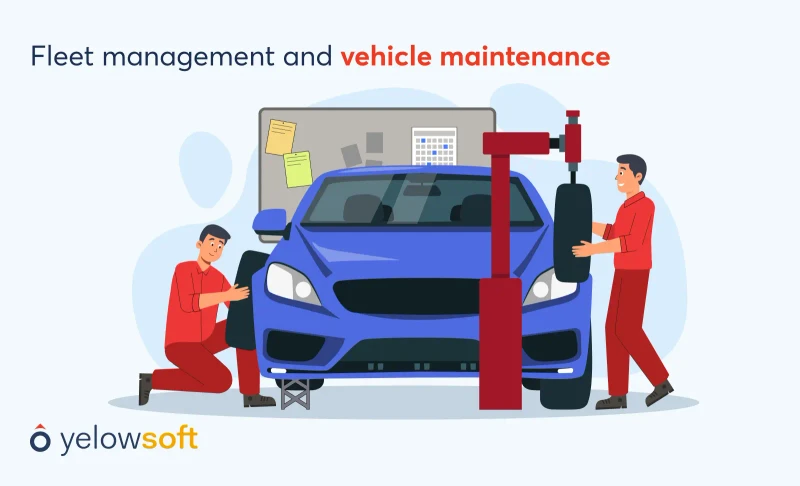
To overcome this, use fleet management software that tracks vehicle health, service records and scheduled maintenance. Be proactive with vehicle checks and routine servicing and you will have fewer interruptions in business.
4. Fuel costs and route optimization
Fuel costs are a big part of operational expenses and inefficient routes can make it worse. Many companies struggle to find the best routes to save time and fuel.
Live navigation and better driver allocation can reduce unnecessary mileage by helping drivers avoid inefficient routes and enabling dispatchers to assign suitable nearby drivers where possible.
These improvements will not reduce the market price of fuel, but they can reduce some of the unnecessary mileage and idle time that contribute to higher operating costs.
5. Driver cancellations and no-shows
When your drivers cancel at the last minute or don’t show up for work then you and your customers are left scrambling to cover the shifts. This leads to customer dissatisfaction and loss of revenue.
The best solution to this driver cancellation is having a backup plan. Implement a notification system in your best taxi app that will alert you and your passengers about the cancellation in advance.
With this advanced information, you can allocate replacements quickly. The best approach is to define a clear fallback process before a cancellation happens. If an assigned driver becomes unavailable, the booking should be reassigned to another eligible driver or returned to the dispatcher for immediate action.
Automated notifications can also keep passengers informed when a driver changes, reducing uncertainty while your dispatch team resolves the booking.
6. Online bookings and payments
As taxi and limo companies accept bookings through websites, apps, phone calls, corporate accounts, and other channels, keeping reservations and payments organised becomes more difficult.
And complex booking systems can frustrate your customers and lead to missed opportunities.
For limousine operators, limo dispatch software can bring reservations, trip details, driver assignments, pricing, and supported payment workflows into a more structured process.
The limo business software is designed to streamline bookings and payments while allowing your customers to schedule rides online with transparent pricing.
This will not only improve the booking experience for your passengers but also avoid overbooking or payment delays.
7. Cancellations and refunds
Customer cancellations are unavoidable, but inconsistent cancellation and refund processes can create unnecessary disputes and administrative work.
Without an efficient cancellation and refund process, it can be a big headache.
Customer cancellations are unavoidable, but inconsistent cancellation and refund processes can create unnecessary disputes and administrative work.
Where supported by your booking system and payment gateway, parts of the cancellation and refund workflow can also be automated to reduce repetitive manual processing.
This will save time, reduce errors and improve your overall customer service.
8. Driver safety and compliance
Taxi and limo companies should follow strict safety regulations for vehicles and drivers. Not following these rules can result in heavy fines, penalties, or even the suspension of your business. This is why staying compliant is crucial.
A centralised system can make it easier to maintain records for driver documentation, vehicle inspections, licence or document expiries, and other operational requirements.
However, software does not guarantee regulatory compliance or vehicle safety. Operators remain responsible for following the licensing, insurance, inspection, employment, and transport requirements that apply in their jurisdiction.
It’s also important to stay updated with local regulations to ensure your entire fleet is operating within the law.
9. Corporate clients and special requests
Corporate clients and VIPs expect top-notch service. It often means for you to be punctual, provide extra privacy, and offer a luxurious experience.

Managing these expectations can be difficult, especially if their requests come in at the last minute.
A corporate account management system can keep client-specific requirements connected to each booking. Depending on the account, this can include authorised bookers, departments, cost centres, pricing arrangements, approval rules, passenger details, and billing preferences.
For repeat corporate bookings, keeping these rules attached to the account reduces the need for dispatchers to recreate instructions for every trip.
By doing this, you build stronger relationships with your corporate clients and make them more likely to return to your service.
10. Managing Disconnected Technology and Systems
Using more technology does not automatically make taxi or limo operations easier. Problems often appear when booking, dispatch, driver management, payments, customer communication, and reporting run through disconnected systems.
When these systems do not share information properly, teams may repeatedly enter the same trip details, switch between platforms, or work with inconsistent data.
As your operation grows, choose technology that can connect the workflows you already rely on and integrate with relevant third-party systems where necessary.
This is where understanding how taxi software solves operational challenges becomes important. Look beyond individual features and evaluate whether the platform can support the complete journey from booking and dispatch to trip completion, payment, and reporting.
Conclusion
Running a taxi or limo company means managing several connected challenges at once. Driver availability affects dispatch, vehicle availability affects capacity, and booking or payment problems can quickly affect the passenger experience.
The most effective way to improve taxi operations is to identify where your team is repeatedly handling information manually, responding to avoidable exceptions, or working across disconnected systems.
Technology will not eliminate every taxi or limousine business problem. Driver management, customer service, compliance, and business decisions still require human oversight. But the right operational platform can reduce repetitive work and give your team better visibility across bookings, drivers, vehicles, payments, and performance.
Yelowsoft brings these workflows together for taxi, private hire, limo, chauffeur, airport transfer, and other passenger transport operators.
Frequently Asked Questions
Common problems include driver availability, dispatch delays, vehicle downtime, rising operating costs, cancellations, payment issues, fragmented booking channels, and inconsistent customer service. These problems often become harder to manage as booking volume and fleet size increase.
Common taxi dispatch challenges include matching bookings with suitable drivers, managing peak demand, responding to cancellations, monitoring driver availability, and handling exceptions without delaying passengers.
Operators can improve taxi fleet management by maintaining accurate vehicle availability, planning preventive maintenance, monitoring utilisation, reducing unnecessary mileage, and connecting vehicle status with booking and dispatch workflows.
Taxi software can reduce repetitive work by connecting booking, dispatch, driver, fleet, payment, communication, and reporting workflows. It does not replace management decisions, but it can improve operational visibility and automate routine processes.
No. Taxi software can support documentation, expiry reminders, reporting and access controls, but operators remain responsible for understanding and meeting local licensing, insurance, tax, employment and data-protection requirements.
Evaluate the platform against your actual booking channels, dispatch rules, fleet structure, driver workflows, payment requirements, reporting needs and integrations. Test realistic operational scenarios before choosing a system.
Turn Daily Operational Challenges Into More Manageable Workflows
Explore how Yelowsoft can bring your booking, dispatch, driver, fleet, payment, and reporting workflows into one connected platform.