Taxi dynamic pricing is one of the fastest ways to fix a problem every fleet owner knows: cars sitting idle during slow hours and rides going unfulfilled during peak demand. If you're running a taxi or ride-hailing business in 2027, you've likely already lost bookings during rush hour, a local event, or a festive weekend, simply because your fares didn't move with demand.
The fix isn't complicated. With the right taxi management software, a taxi dynamic pricing strategy is a five-step setup that keeps adjusting itself once it's configured. This guide covers what dynamic pricing means for taxi businesses, why it matters, and the exact steps to implement it, so you can capture peak-hour revenue without overpricing your regular rides.
Overview of dynamic pricing in the taxi industry
It is a pricing strategy that helps taxi business owners like you to adjust fares in real time, based on demand and supply.
In simple words, it allows you to adjust taxi fares based on peak hours in:
-
Festive season
-
Events (football matches, etc) and more…
The aim of this taxi management software feature is to balance the number of passengers and taxis on the road while reducing wait times for passengers and increasing revenue for your taxi business at the same time.
Let’s understand with an example.
Consider it’s rush hour in New York City. The streets are packed with commuters which has raised the demand for taxis.
This will also be considered as peak hours. If you follow the traditional flat-rate pricing in these peak hours, you will not be able to fulfil rides and ultimately will miss earning revenue opportunities.
However, if you apply the dynamic pricing strategy, you will be able to adjust fares in real time. Plus, you will also remain profitable even when demand is high.
But the thing is, to apply a dynamic pricing strategy in your taxi business, you would need a taxi management software. And below, you will explore it in detail.
This is what dynamic pricing is. Let’s now understand the significance of using dynamic pricing taxi management software.
Why Taxi Dynamic Pricing Matters for Your Business
Dynamic pricing for taxis isn't just a fare-adjustment feature, it directly affects revenue, driver retention, and customer experience.
A 2023 Operations Research study that modeled dynamic pricing using real New York City taxi data found something worth noting: most of the revenue gain from dynamic pricing came from serving more riders, not from charging higher prices. In other words, a well-tuned pricing model grows your business by filling more trips during peak-hour taxi pricing windows, not just by charging more per ride.
In practice, dynamic pricing and fare management software delivers four connected benefits:
-
More revenue during predictable demand spikes: festive seasons, events, and peak hours, without manually adjusting fares trip by trip
-
Higher driver earnings and retention, since drivers get compensated fairly for working busy hours, which keeps them from switching to competitor apps
-
Better customer experience, because guaranteed availability during high demand matters more to most riders than a flat rate
-
More efficient fleet management, since zone-based taxi pricing lets you redistribute vehicles toward high-demand zones instead of leaving some areas underserved
You can track how each of these plays out using taxi reporting and analytics, which shows ride volume, average fare, and driver availability by zone and time slot.
5 Steps to successfully implement dynamic pricing strategies with taxi management software
In today’s digital era and fast-paced world, staying competitive means being adaptable. One of the most effective ways to achieve this is by implementing a dynamic pricing strategy.
But the question is how to implement this.
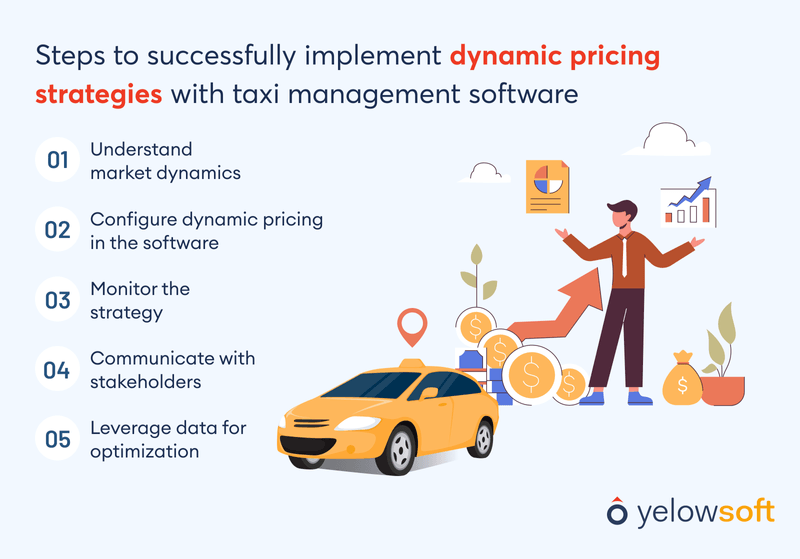
Follow the below-mentioned 5 steps and you will successfully implement it.
Step 1: Understand the market dynamics
Before you jump into the technical aspects of setting dynamic pricing, you need to have a clear understanding of your market.
The first thing you need to do is;
Analyze demand patterns and peak times
Analyze the demand patterns for your taxi services by asking these questions to yourself.
-
When do most of my customers request rides?
-
Are there specific times or days when demand sparks?
Answer these questions and understand the patterns. This will allow you to create a pricing strategy that will align with your customer needs.
Assess competition and customer expectation
Next, take a close look at your competitors. Identify their strengths and weaknesses by knowing;
-
What pricing strategies are they using?
-
Are they also employing dynamic pricing, or are they sticking to fixed rates?
Once you know what your competitors are doing, you will be able to position your pricing strategy more effectively.
Moreover, it is also important to consider your customer expectations.
Modern customers are tech-savvy and understand the concept of dynamic pricing. They expect fair pricing.
Hence, ensure your dynamic pricing model is easy to understand. This will help you build trust and loyalty among your customers.
Step 2: Configuring dynamic pricing in taxi management software
Once you have a solid grasp of your market dynamics, the next step is to configure your taxi management software to implement dynamic pricing.
This involves setting up pricing rules and customizing algorithms to respond to various scenarios.
Setup pricing rules based on demand, time, and location
Your taxi management software should allow you to set up pricing rules that adjust fares based on specific criteria such as;
-
Demand
-
Time of day
-
And location
For example, you can set a rule in the software that automatically increases price during peak hours, high demands, festive seasons, football matches or any political event.
The same you can set lower price rules during off-peak hours to encourage more bookings.
Customize pricing algorithms for different scenarios
With the right taxi management software, you will get a customization option for pricing algorithms. For example, a common starting configuration is a 20% fare multiplier during weekday 6–8 PM peak windows, dropping to a 10% discount between 1–4 AM to encourage bookings during slow hours. Most operators fine-tune these numbers after the first month of ride data.
It means you can tailor the dynamic pricing model to suit different scenarios unique to your business.
Different scenarios may include;
-
Weekdays
-
Weekends
-
Trip to suburban areas
-
Trip to urban areas
This way, you can ensure your dynamic pricing strategy remains flexible and responsive to the ever-changing market conditions.
Step 3: Monitor and adjust the strategy
Dynamic pricing is not a set-it-and-forget-it solution. It requires continuous monitoring and adjustment to ensure it’s working as intended. Here is how you can do it.
Continuously monitor performance with real-time data Your taxi management software should provide real-time data on how your pricing strategy is performing. This includes metrics such as;
-
The number of rides
-
Average fare per ride
-
Driver availability, and
-
Customer satisfaction
Regularly review these metrics to identify trends and make informed decisions about when and how to adjust your pricing rules.
Make adjustments based on driver feedback and customer response
Driver and customer feedback are invaluable when fine-tuning your dynamic pricing strategy.
Drivers are on the front lines and can provide you the insights on how pricing changes affect their work and income.
For instance, the driver can tell you about the high pricing that can lead to fewer rides. And also can inform you about the low pricing which will lead to inadequate earnings. Their feedback can help you adjust the strategy.
Similarly, with the taxi booking management software, you can keep an eye on customer responses. You will know that;
-
Are your customers complaining about price hikes during certain times?
-
Are they dropping off during peak pricing periods?
Use this feedback to strike a balance between profitability and customer satisfaction.
Step 4: Communicate with stakeholders
Effective communication is key to the successful implementation of dynamic pricing.
Both your drivers and customers need to understand how dynamic pricing works and how it benefits them. Do the following for better communication.
Ensure transparency with your drivers about fare adjustments
Drivers are the critical stakeholders in your taxi business. They need to understand how and why fare adjustments happen so they can make the most of peak times and optimize their earnings.
You should regularly update your drivers on any changes to the dynamic pricing model and provide them with tools (driver app) to track their performance and earnings in real time.
Read more: How advanced dispatch software can improve driver efficiency and job satisfaction
Educate your customers on how dynamic pricing benefits them
Customers are more likely to accept dynamic pricing if you can make them understand its benefits.
Use your taxi booking app or website to educate your customers. Give them proper explanations, answer common questions if they have any, and also offer tips on how to save money by booking rides during off-peak times.
Step 5: Leverage data for optimization
Data is the backbone of any successful business. The white-label cloud-based taxi management software will provide you access to data which you can use to optimize dynamic pricing strategically.
Use historical data to refine and improve the pricing strategy
Historical data will offer valuable insights into past trends and patterns of your business. By analyzing data from the previous months or years, you can identify;
-
Consistent demand spikes
-
Slow periods, and
-
The effectiveness of past pricing adjustments
You can use this valuable information to refine your pricing rules and algorithms.
Implement predictive analytics to anticipate demand surges
Predictive analytics helps you in forecasting the future demand based on a range of factors like;
-
Historical data
-
Current market trends, and
-
External conditions like weather or local events
You can adjust your pricing strategy proactively before demand surges take place and ensure you are always one step ahead of the competition.
Conclusion
Embrace dynamic pricing to take your taxi business forward. Understand that dynamic pricing is no longer a luxury but a necessity in today’s modern taxi industry.
Competitors are upgrading themselves and customers expectations are evolving every day. Keeping this in mind, you must use flexible pricing strategies to remain profitable and competitive.
Implementing a dynamic pricing strategy in a traditional business is nearly impossible. Hence, adopt the best taxi management software that comes with the in-built dynamic pricing feature. This will allow you to respond to market demands and optimize your revenue quickly.
The affordable and reliable way to implement pricing strategies for taxi services is to use white-label cloud-based taxi management software. If you are ready to take your taxi business from mediocre to meteoric by implementing the best taxi management software, explore Yelowsoft.
Frequently Asked Questions
Taxi surge pricing is a form of dynamic pricing that automatically raises fares when rider demand outpaces available drivers in a zone, then returns to the base rate once supply and demand rebalance.
Automated fare calculation applies the pricing rules set in your taxi management software, time of day, zone, demand level, to work out the final fare in real time, without a dispatcher adjusting rates manually per ride.
Not quite. Surge pricing is one form of dynamic pricing. Dynamic pricing is the broader system, covering time-based, zone-based, and demand-based rules, surge pricing specifically refers to short-term price spikes during sudden demand shocks.
Generally not, if it's transparent. Riders tend to accept higher fares during clearly high-demand periods, events, weather, rush hour, as long as the app shows the adjusted price before booking, and off-peak rides stay at or below the standard rate.