Taxi aggregator apps can help you access demand quickly, but that convenience often comes at a cost. You may generate more bookings while giving up part of your margins, customer data, pricing flexibility, brand visibility, and control over the booking experience.
Running your business through an aggregator means operating inside someone else’s marketplace. Customers interact with the platform, commissions are deducted from each ride, and changes to platform policies can directly affect your operations.
With your own taxi dispatch software, bookings flow through channels that you control. You can manage drivers, fares, customer communication, branding, dispatch rules, and repeat-booking strategies within your own ecosystem.
The real decision is therefore not whether your taxi business should go digital. It is whether you want to depend mainly on third-party demand or build direct booking channels that create long-term business value.
This comparison explains how taxi aggregator apps and taxi dispatch software differ across customer ownership, profitability, operational control, branding, scalability, and long-term growth.
Understanding the Two Business Models
Before comparing results, it is important to understand how each model works and what role it plays in modern transportation operations.
What Are Taxi Aggregator Apps?
Taxi aggregator platforms operate as digital marketplaces that connect passengers with drivers and operators. Customers book rides through the aggregator's application, while operators receive ride opportunities through the same network.
For many businesses, this model provides immediate access to demand. Instead of investing heavily in marketing, customer acquisition, and technology infrastructure, operators can begin receiving ride requests through an existing marketplace.
This creates obvious advantages, particularly for startups and small fleets. However, the model also introduces dependency. The aggregator controls customer acquisition, customer communication, pricing policies in many cases, and the overall booking experience.
While operators gain ride volume, they often surrender a significant degree of ownership and control.
What Is an Independent Taxi Booking System?
An independent booking system allows operators to manage their own transportation ecosystem.
Using modern taxi dispatch software, operators can create a branded experience that includes:
-
Branded passenger apps for direct ride booking
-
Driver applications
-
Dispatcher management panels
-
Administrative dashboards
Instead of relying on marketplace demand, bookings flow directly into the operator's platform. The business controls pricing, communication, branding, and operational workflows.
This approach requires greater investment in technology and customer acquisition, but it also provides significantly more control over the future of the business.
The Biggest Difference: Customer Ownership
Many operators focus heavily on ride volume. While bookings matter, long term business value often comes from owning customer relationships.
How Aggregator Platforms Control Customer Relationships
When customers book through an aggregator, they primarily interact with the platform rather than the operator.
As a result:
-
Customer data access is often limited
-
Communication is controlled by the platform
-
Brand visibility becomes secondary
-
Loyalty building opportunities are restricted
Even if your service exceeds customer expectations, the customer may remember the aggregator more than your company.
Over time, this can make it difficult to establish a recognizable brand in the market.
Why Direct Customer Ownership Creates Long Term Value
When bookings come through your own platform, the relationship changes completely.
You own the customer database. You manage communication. You determine how loyalty programs work. Most importantly, repeat customers return to your brand instead of a marketplace.
| Area | Aggregator Apps | Own Booking System |
|---|---|---|
| Customer Data | Limited | Full Access |
| Branding | Platform Branding | Your Branding |
| Loyalty Programs | Restricted | Fully Controlled |
| Repeat Business | Platform Driven | Operator Driven |
The difference may seem small initially, but over several years it can significantly impact customer retention and profitability.
Expert Tip:
Track customer acquisition source, repeat booking rate, and lifetime value separately for aggregator bookings and direct bookings. These metrics often reveal hidden profitability differences that revenue reports alone cannot show.
Revenue and Profitability: Which Model Makes More Financial Sense?
Revenue growth and profit growth are not always the same thing.
Many taxi businesses focus on increasing bookings without fully evaluating how much revenue remains after commissions, incentives and operational costs.
The Hidden Cost of Aggregator Commissions
Aggregator platforms generate demand, but that demand comes with a price.
Every completed booking typically includes a commission deduction. While a single ride may not seem significant, the impact becomes much larger as booking volumes increase.
Consider a fleet completing hundreds or thousands of rides each month. A percentage of every booking is continuously diverted to the platform.
Additional challenges may include:
-
Reduced fare flexibility
-
Competitive pricing pressure
-
Increased dependency on platform policies
-
Limited control over promotions and offers
As businesses scale, commission expenses often become one of the largest operational concerns.
How a White Label Taxi App Improves Revenue Retention
A white label taxi app allows operators to accept bookings directly from customers without recurring marketplace commissions.
The benefits extend beyond simple cost savings.
Direct bookings often improve:
-
Revenue retention
-
Customer lifetime value
-
Repeat booking rates
-
Marketing efficiency
This does not mean aggregators should be avoided entirely. Many successful operators use aggregator platforms to acquire customers while encouraging repeat riders to use their branded booking channels.
That combination often creates a more balanced and sustainable growth model.
Reduce Aggregator Dependency Without Losing Booking Demand
See how Yelowsoft helps taxi operators build branded, direct booking channels while continuing to use aggregators as part of a balanced customer acquisition strategy.
Explore a Direct Booking Strategy With Yelowsoft
Operational Control and Dispatch Efficiency
As fleets expand, operational efficiency becomes increasingly important.
Even small delays in dispatching can affect customer satisfaction, driver productivity and overall profitability.
Challenges of Managing Operations Through Aggregator Platforms
Marketplace platforms are designed to serve millions of users across multiple regions.
Because of this, operators often have limited control over:
-
Dispatch workflows
-
Driver allocation rules
-
Pricing structures
-
Service area strategies
Businesses frequently need to adapt their operations to platform requirements instead of optimising processes around their own objectives.
Benefits of an Automated Taxi Dispatch System
An automated taxi dispatch system provides operators with greater control over day to day operations.
Features commonly include:
-
Intelligent ride assignment
-
Real time driver tracking
-
Route optimisation
-
Fleet monitoring
-
Driver performance management
A comprehensive taxi management system also reduces manual workload for dispatch teams while improving response times and operational visibility.
This becomes especially valuable for businesses managing larger fleets, airport transfers, corporate transport accounts, or high booking volumes.
Brand Building: Renting an Audience vs Building an Asset
Every transportation company eventually faces a branding decision.
Do you want customers to remember the platform or your business?
Why Aggregator Riders Often Remember the Platform
Passengers generally interact with the app they use to make the booking.
As a result, the aggregator often becomes the primary brand in the customer's mind.
Operators may deliver excellent service, but customer loyalty frequently remains tied to the marketplace.
This creates a situation where businesses become service providers within another company's ecosystem.
How Your Own Taxi Booking App Builds Brand Equity
A branded taxi booking app changes the customer experience.
Customers interact directly with your company throughout the booking journey.
Booking confirmations, notifications, support interactions and loyalty programs all reinforce your brand identity.
For operators focused on corporate transportation, airport transfers, premium services or recurring customers, this brand ownership can become a major competitive advantage.
Expert Tip:
Measure branded searches and direct booking growth over time. These indicators often show whether your marketing investment is building your company brand or strengthening a third party platform.
Scalability: Which Model Supports Long Term Growth?
The answer often depends on your current stage of business growth.
When Aggregator Apps Help New Operators Grow Faster
For startups and smaller fleets, aggregators can provide a valuable launchpad.
Advantages include:
-
Immediate access to customers
-
Lower upfront investment
-
Faster market entry
-
Reduced marketing complexity
These benefits can help new operators establish a presence in competitive markets.
Why Established Operators Move Toward Their Own Platform
As fleets grow, priorities begin to change.
Operators start focusing on:
-
Margin improvement
-
Customer retention
-
Operational independence
-
Brand development
-
Multi channel booking strategies
This is where taxi booking software and a dedicated taxi dispatch platform become increasingly attractive.
The goal shifts from simply acquiring rides to building a transportation business that can scale sustainably.
A Side by Side Comparison
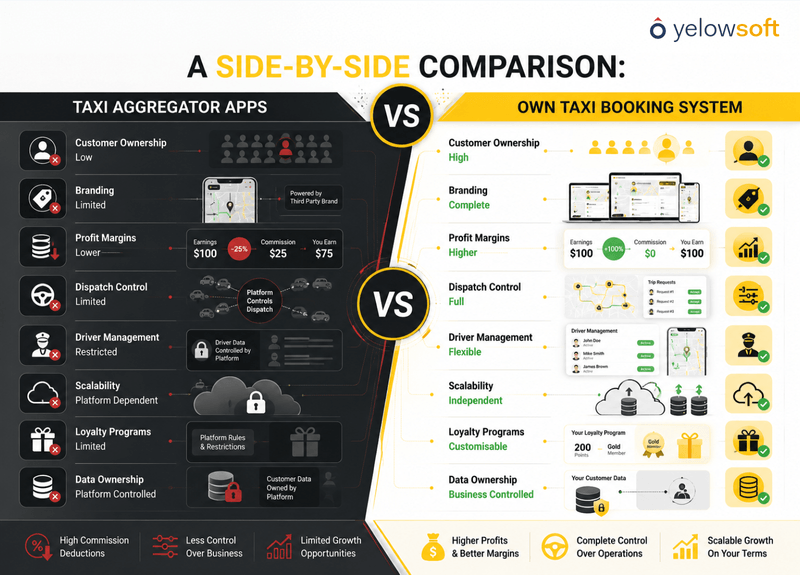
Looking at both models together makes the differences easier to evaluate. Neither model is universally better. The right choice depends on your business objectives, market conditions, and growth strategy.
Should You Choose One or Use Both?
For many operators, the answer is not necessarily one or the other.
The Hybrid Growth Strategy
A growing number of transportation companies use a hybrid approach.
They leverage aggregators for customer acquisition while simultaneously investing in direct booking channels.
This strategy helps operators:
-
Diversify booking sources
-
Reduce platform dependency
-
Improve profitability
-
Strengthen customer relationships
Signs It Is Time to Invest in Your Own Booking Ecosystem
Several indicators suggest that it may be time to build your own platform:
-
Rising commission costs
-
Growing repeat customer base
-
Expanding fleet operations
-
Increasing corporate account business
When these factors begin to emerge, greater ownership often creates stronger long term returns.
How to Transition from Aggregator Dependence to Direct Bookings
Moving toward direct bookings should be approached strategically rather than abruptly.
Build Your Digital Booking Infrastructure
Start by creating a complete booking ecosystem that includes:
-
Web booking system for accepting direct bookings via your website
-
Customer mobile app
-
Driver application
-
Dispatch management tools
The experience should be simple, reliable and convenient for both customers and drivers.
Focus on Customer Retention
Technology alone will not create loyalty. Operators also need a structured customer retention strategy built around reliable service, direct communication, rewards, and frictionless repeat booking.
Successful operators focus on:
-
Reward programs
-
Personalised communication
-
Automated notifications
-
Consistent service delivery
Over time, these efforts encourage customers to book directly rather than through third party platforms.
Expert Tip:
Introduce direct booking incentives only after ensuring the customer experience is equal to or better than aggregator platforms. Convenience remains one of the strongest drivers of customer behavior.
Conclusion
The transportation industry continues to move toward digital first operations, and technology now plays a critical role in how taxi businesses compete and grow.
Taxi aggregators and independent booking systems both serve important purposes. Aggregators can help operators access demand quickly and enter new markets with lower upfront investment. Independent platforms provide greater control over customer relationships, branding, dispatch operations, and long term profitability.
For new operators, aggregator platforms may offer a practical way to establish market presence. For growing fleets, however, relying exclusively on third party marketplaces can create limitations around margins, customer ownership, and operational flexibility.
Ultimately, the best approach depends on your business goals. Many successful operators combine both models, using aggregators for visibility while building direct booking channels for sustainable growth. If your objective is to reduce commission dependency, strengthen customer relationships, and create a scalable transportation brand, investing in modern taxi dispatch software can provide the foundation needed to achieve those goals.
Own Your Customers. Control Your Growth.
See how Yelowsoft helps transportation businesses build a profitable direct booking ecosystem.
Book a Demo
FAQs
Taxi Aggregator Apps provide access to marketplace demand, while Taxi dispatch software helps operators manage bookings, drivers, customers, and operations under their own brand.
Yes, they can generate bookings quickly. However, commission fees may reduce margins, making direct bookings more profitable as your business grows.
Yes. Modern taxi booking software allows small operators to launch branded booking apps without building technology from scratch or hiring developers.
A white label taxi app provides greater control over branding, customer relationships, and revenue, while aggregators primarily help with customer acquisition and visibility.
Yes. Many operators use aggregators to attract new riders while encouraging repeat customers to book through their own channels.
A taxi dispatch platform automates ride assignment, driver tracking, and fleet management, helping reduce manual work and improve response times.
Consider investing when commission costs increase, repeat bookings grow, corporate accounts expand, or you need greater control over operations and customer data.
Operators can reduce commission dependency by growing direct bookings through a branded passenger app, web booking system, corporate portal, loyalty campaigns, and repeat-customer incentives while still using aggregators selectively.
The aggregator usually controls the primary customer relationship and may restrict the operator’s access to customer data. With taxi dispatch software, the operator manages direct booking data within its own system.
The cost depends on fleet size, required apps, integrations, branding, booking channels, and custom workflows. Operators should compare implementation costs against recurring commissions and lost customer lifetime value.
A hybrid strategy uses aggregators to attract new customers while building direct channels such as passenger apps, web booking, corporate portals, WhatsApp, and phone automation for repeat and account-based bookings.
Launch time depends on branding, integrations, app-store approval, data migration, pricing configuration, and customisation. A white-label system generally launches faster than building a platform from scratch.


